ISO 23875 is the definitive international standard that defines how to design, test, operate, and maintain operator enclosures with respect to air quality. It seeks to protect workers from airborne hazards such as respirable crystalline silica (RCS).
Sy-Klone’s RESPA® Air Quality Systems are engineered to conform to the most exacting global standards, including ISO 23875.
What are the core requirements of ISO 23875?

CO2 Monitoring
First alarm threshold: Ambient CO2 level plus 400 parts per million (PPM);
Second alarm threshold: 2500 PPM

Recirculation Efficiency
Maximum respirable particulate matter concentration ≤25 µg/m3 of air at start and end of decay test (<120 sec decay time).

Filter Efficiency
Filtration that exceeds 94% efficiency at 0.3 microns is recommended. Filters must pass the required intake air leakage and particle decay tests.

Pressurization Requirements
Operator enclosures must maintain a minimum pressure of 20 Pa with key on and HVAC blower turned off; maximum pressure 200 Pa.

Real-Time Monitoring
Monitor must include an audible alarm for CO2 and pressurization to alert the operator when levels exceed the permissible pressure range and CO2 thresholds.
ISO-conforming air quality solutions
Sy-Klone RESPA® Air Quality Systems are engineered to conform with ISO 23875 by delivering consistent cab pressurization, high-efficiency filtration, and real time monitoring. When properly installed and paired with a well-sealed enclosure, our systems are designed to meet the standard’s performance requirements.
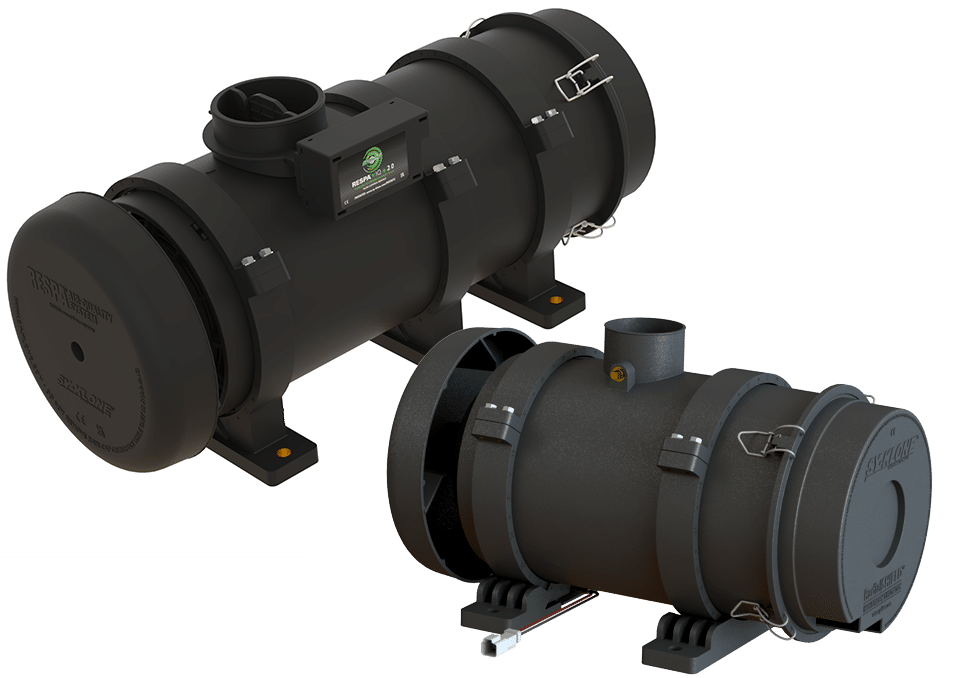
Fresh Air Systems
Deliver clean air to your operators. The RESPA®-CF2 combines a precleaner, pressurizer and HEPA filter in a compact unit.
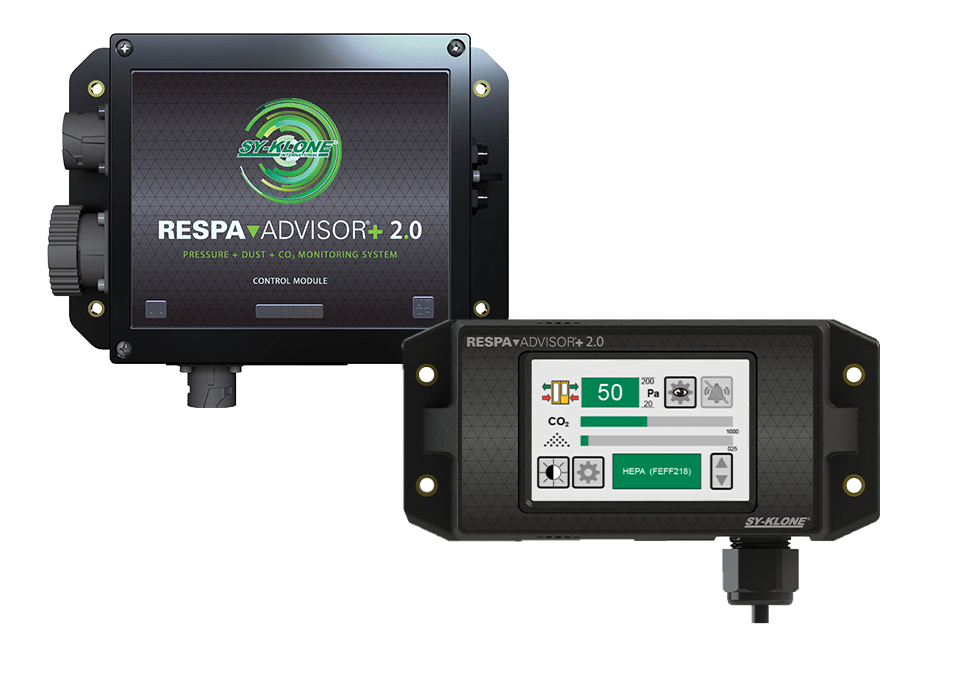
Real-Time Monitoring & Control
The RESPA Advisor®+ 2.0 continuously monitors and regulates pressure, CO₂, and dust levels, creating a safer, cleaner, and more comfortable environment for operators in the most demanding conditions.
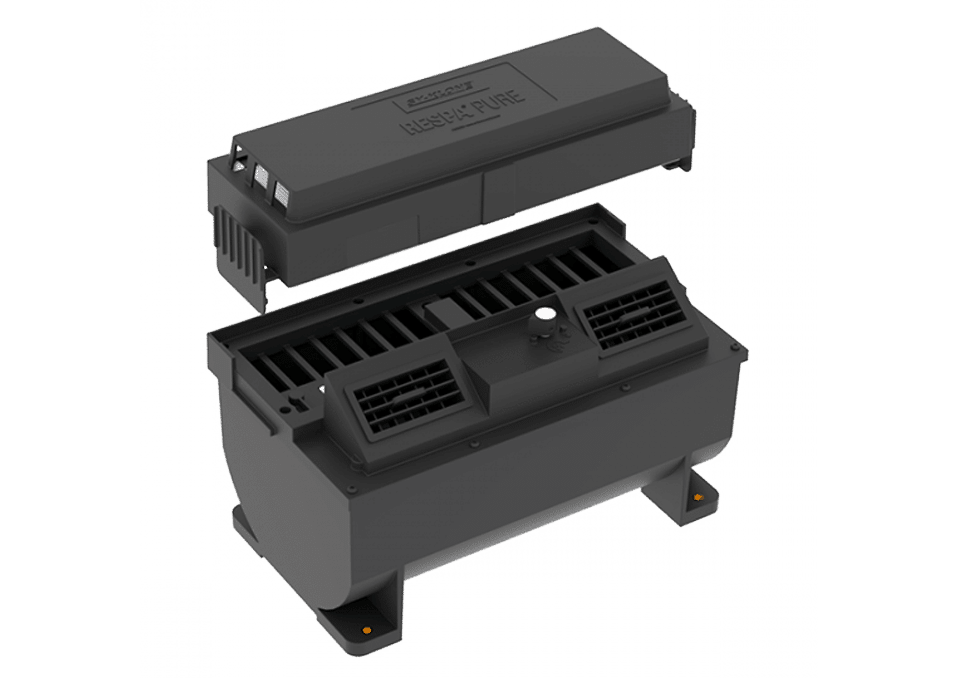
Recirculated Air Systems
Continuously keep cabin air recirculating and provide a haven for your operator with our series of HEPA recirculated air systems.
Industry-Leading Performance
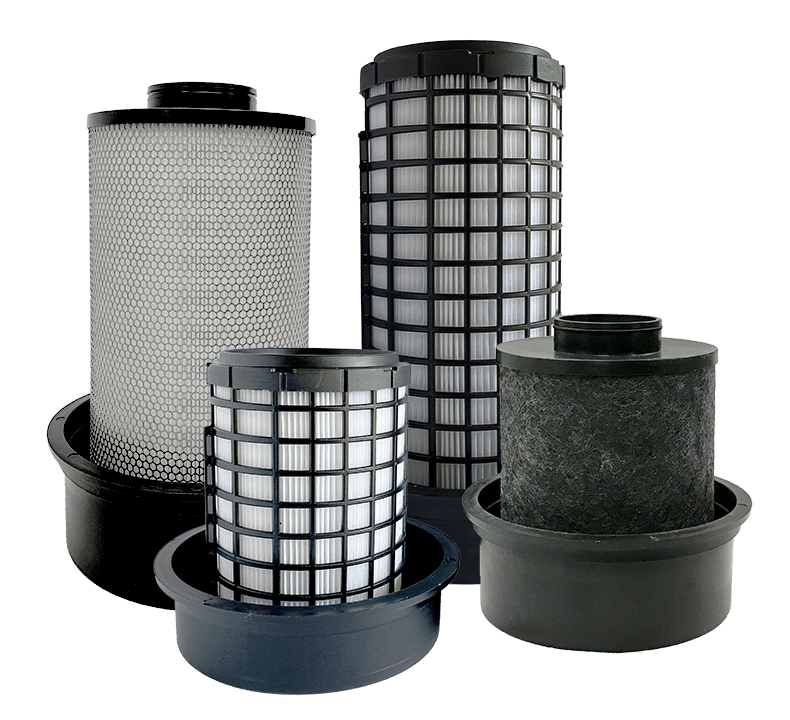
RadialSHIELD® Air Filters
ISO 23875 establishes strict requirements for in-cab air quality. To conform, intake air filtration systems must achieve high-efficiency performance—capturing ≥99.97% of particles at 0.3 µm—while maintaining consistent airflow and system integrity.
RadialSHIELD® HEPA filters are engineered to meet these rigorous demands:
HEPA: 99.99% at 0.03 µm
Gas + HEPA ABEK1 P3: 99.97% at 0.03 µm
Ammonia + HEPA K2 P3: 99.97% at 0.03 µm
Odor + HEPA: 99.97% at 0.03 µm
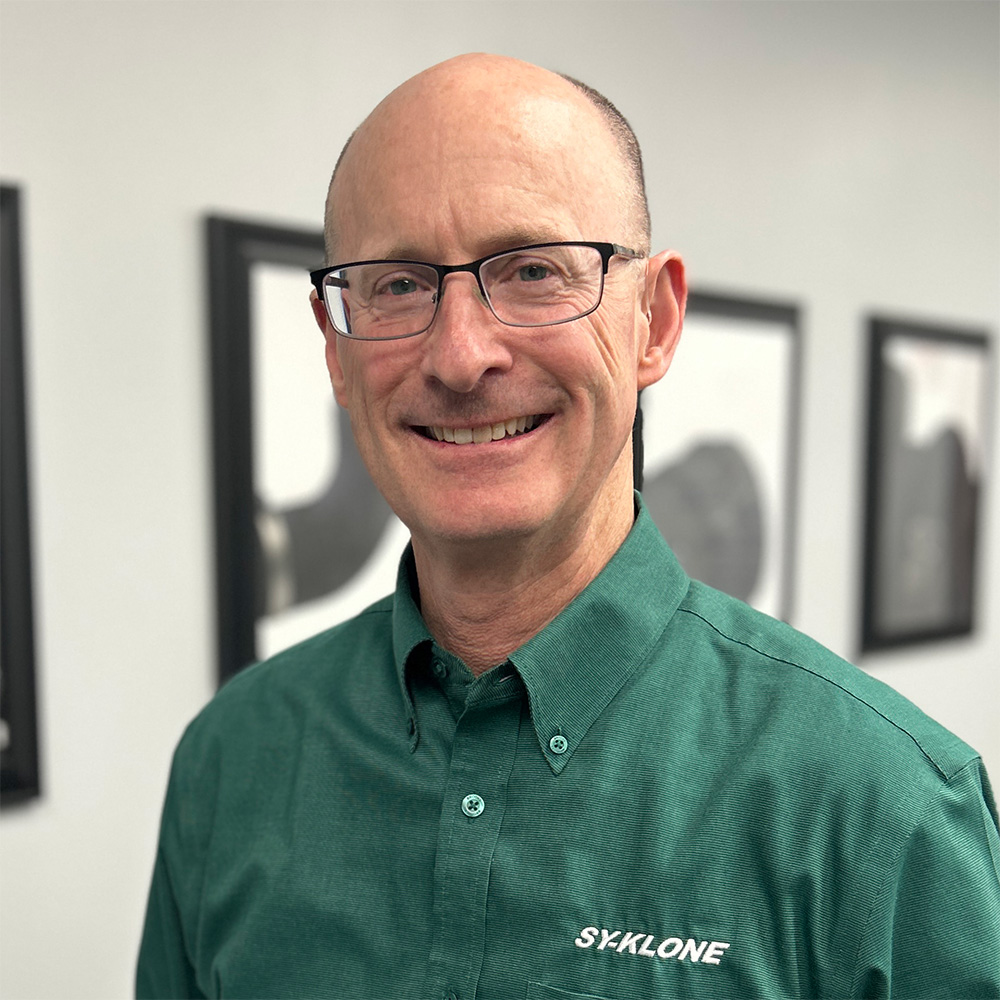
Jeff Moredock, Sy-Klone EVP of Standards and Regulation, is a global authority in the field of operator enclosure air quality.
Following nearly two decades of cab air quality co‑research, including collaboration with the National Institute for Occupational Safety and Health (NIOSH) Pittsburgh Mining Research Division (PMRD), Jeff serves on ISO Technical Committee 82 (Mining) and convenes Working Group 9 on Operator Enclosure Air Quality. He was the International Project Lead for ISO 23875:2021 and Amendment 1:2022 and currently serves as Project Lead for the ongoing revision of ISO 23875. In addition, Jeff is Chair of the U.S. Technical Advisory Group to ISO/TC 82, with responsibility for U.S. participation in ISO mining standards.
“Regulations help, but it’s respect for worker well-being that should drive the push for cleaner air. This is why I like to frame the conversation around compassion, rather than just compliance.”
Jeff Moredock

The backbone of modern trade
The International Organization for Standardization (ISO), is an independent, non-governmental organization that develops internationally recognized standards based on extensive research, expert consensus, and real-world best practices. These standards are specifically designed to support global trade, streamline operations, and raise the bar for safety, efficiency, and reliability across industries.
Understanding the difference...
Global ISO Standards
- Recognized worldwide
- Built on proven best practices
- Independently verified compliance
- Consistent, measurable performance
Local Standards
- Varies by region
- Consistency across operations is localized
- Verification is separate from ISO
- Enforcement could supersede ISO
FAQ: How Sy-Klone helps you achieve ISO conformance
How do I know my cabs will meet ISO 23875 conformance with your solutions?
Because we make sure of it. While Sy-Klone products are specifically engineered to conform to ISO 23875, we also ensure their performance measures up. We don’t simply sell products — we work with you every step of the way to ensure your machine’s air quality system conforms to the standard.
What is Sy-Klone’s process to ensure ISO 23875 conformance?
Our process will be tailored to you and the needs of your equipment. That said, they tend to follow a discrete set of steps:
- First, we assess the needs of your site and equipment to achieve conformance.
- Next, we design and install the air quality system needed for each piece of equipment.
- Finally, when commissioning your machine, we test and document your conformance with the standard.
Does the ISO standard require me to buy all-new equipment?
No. Sy-Klone’s solutions are designed to integrate into existing equipment and are compatible with the most commonly used machines on your site.
Will ISO 23875 conformance save me money?
Most likely, yes. Along with protecting the health of your operators, improving the air quality of your cab comes with several performance efficiencies.
Check out our RESPA savings calculator for one estimate of cost savings.
What are the risks of non-conformance?
ISO 23875 is an international best practice for how we protect the health of operators inside cabs. Risks include:
- Class action lawsuits
- Worker health problems
- Increased maintenance costs
- Reputational damage
How do we minimize downtime while going through your process?
Sy-Klone factors reducing downtime into its implementation strategy. Since conformance is machine-specific, implementation is tailored to the needs of the job site.
Take a step toward compliance.
Airborne contaminant types and concentrations, cab integrity, pressurization levels, and potential air leakage all directly impact system effectiveness. Achieving and maintaining full ISO compliance depends on controlling key real-world variables. Because operating environments can vary significantly, combining the correct equipment, proper installation, and ongoing monitoring is essential to ensure reliable performance and adherence to ISO 23875 benchmarks. Consult your authorized Sy-Klone distributor to determine the right RESPA® Air Quality System for your specific operating conditions and compliance goals.